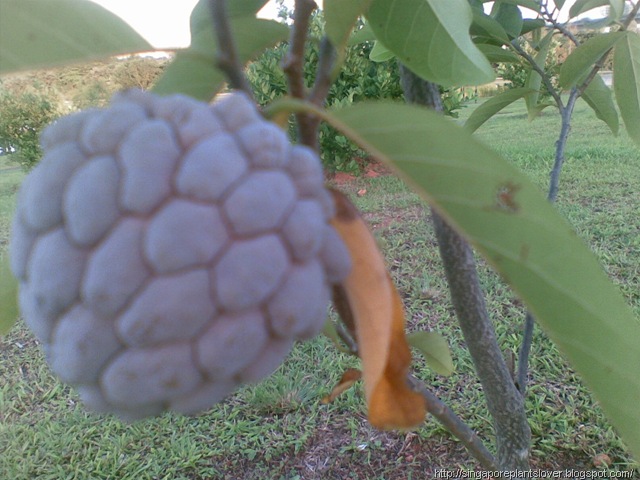
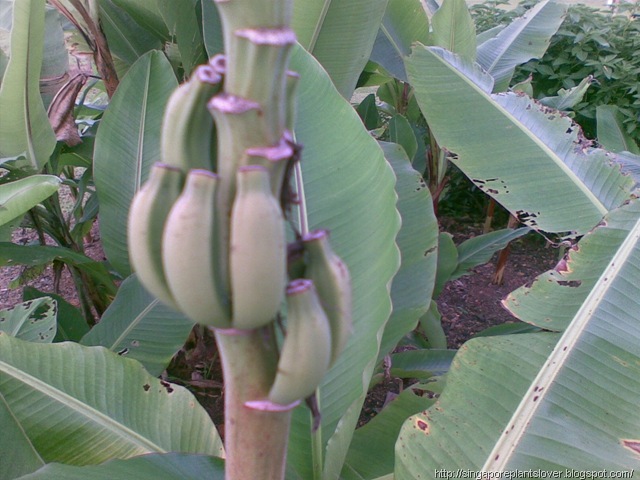
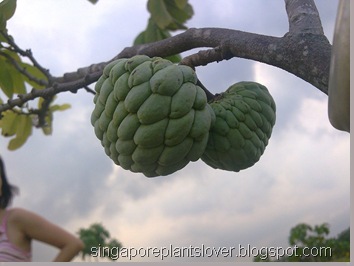
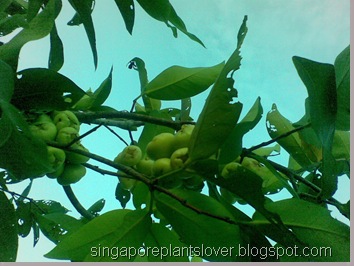
Anyone tell me what is the tree name?
Showing posts with label fruits. Show all posts
Thursday, January 22, 2015
Wednesday, November 12, 2014
Mulberry
I had one big Mulberry tree growing in a big pot in my childhood time, I kept silkworms, and use mulberry leaves to feed them...There are fun memory of Mulberry tree. The most exciting time is Autumn, all kids were waiting for the Mulberry fruits to ripen...Immature fruits are white, green, or pale yellow. In most species, the fruits turn pink and then red while ripening, then dark purple or black, and have a sweet flavor when fully ripe.
Sunday, September 29, 2013
Passion Fruits & Passion Flowers
Just some updated for my old post passion-fruits, it is bearing fruit now.
Passion-fruits are easy to grow in containers as long as with enough sunlight and fertilizer, of course, the container is required to a certain size, at least like a half wine barrel or our Chinese salt egg barrel. Ensure you use a good quality well-drained potting mix formulated specifically for containers.One of very interesting notes about this plant, my friend planted one for almost 3 years with nicely grown leaves and beautiful flowers, but none of one fruit...Actually there are few type of similar plants, one as named Passiflora alatocaerulea forms no fruit.
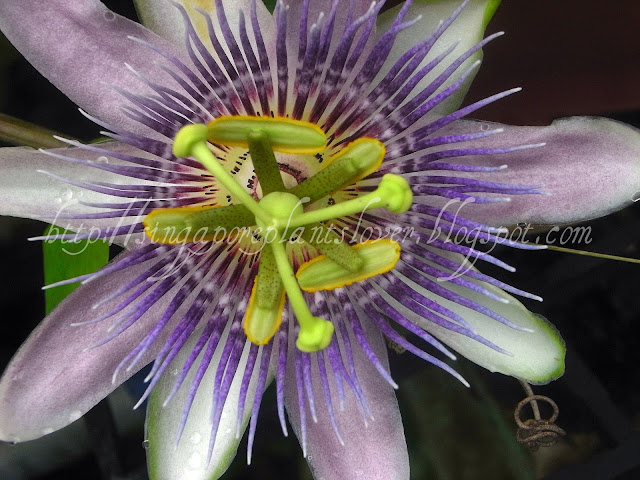
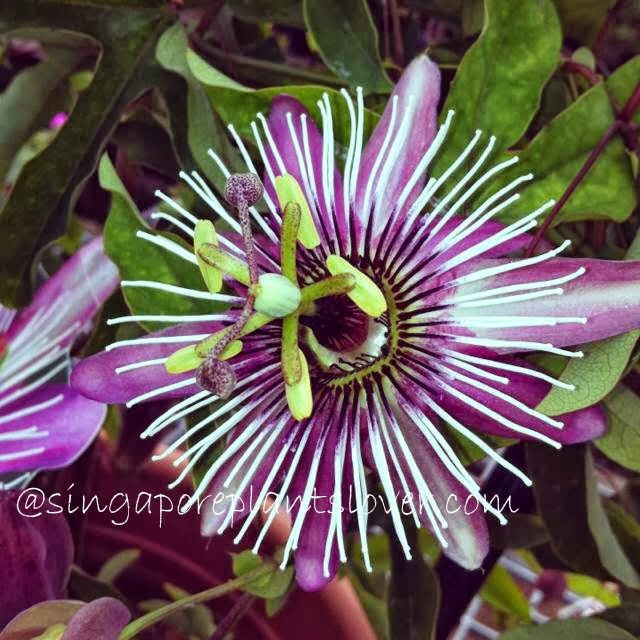
Passiflora, known also as the passion flowers or passion vines, is a genus of about 500 species of flowering plants. The two pictures from above and below were taken from my potted plants, just for flowers, stunning beauty.
If you are growing only one passion fruit, select a self-pollinating cultivar, typically the purple fruit producing varieties.
The yellow variety of the passion fruit vine is best suited for our local tropical climate. It is a hardy plant with woody vines, a climber and will need trellising to hold it up. The pollination of this plant is usually facilitated with carpenter bees. You will need to manually pollinate your passion flowers if there is no bees available in your area. And normally need female and male flowers bloom at the same time to do so. These plants are self-sterile, which means that you will need to cross the pollen produced by one plant with the stamen of another plant. That is the reason, some old people say there are male plants and female plants. LOL. By the way according to my study, Yellow passion fruit vines will not accept the pollen of the purple variety. So choose the right type of plant if your space is limited.
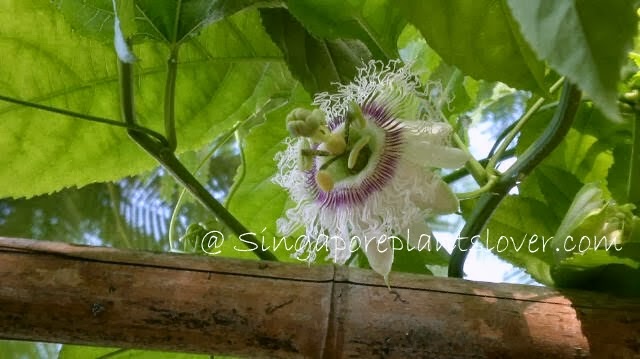
Some other passion flora I found which is not in beautiful purple or blue, they are white flowers. Like the two pictures below:
This picture I found from Gardening with Wilson
According Wilson say, This one, Passiflora foetida. a member of the Passion Fruit family, Passifloraceae. Unlike its relatives, the Giant Granadilla and the Common Passion Fruit (Passiflora edulis), Passiflora foetida occurs mainly as a weed. They were growing in wild in most tropical countries, including Singapore in the past, but now it is getting uncommon as Singapore continues to urbanise.
The one below was seen in Beijing, on the roof top of people's house, cant tell its species. Pure white flowers with a circle of purple in the centre, very unique, indeed.
My passion for passion flowers collection, hope you like my share. Wishing all of you have a wonderful weekend.
Thursday, October 7, 2010
Growing pineapple
There are many varieties of pineapple plants. Some are ornamental and some are edible. This one in my picture grow on the slope at SengKang park, I believe it is for ornamental use only.
Pineapples are exotic fruits that make great houseplants. They are fragrant, delicious to eat, and fun to look at. The sound of the Chinese word for pineapple is “Wang Li” it close to the sound of “good luck ”, so the pineapple has become a popular traditional Feng Shui symbol of wealth, fortune and prosperity. They are one of the fruits most welcomed during the Chinese New Year.
However they are also fun and simple to grow. Buy a pineapple with green, healthy leaves stem on top from any fruits store, using just the discard top that you have cut off, you can grow your own pineapple in a pot. Remember to strip off the leaves to about ¾ inch from the stem’s base. This can increase rooting chances. I was told hand the stem facing down in a dry and cool area for a week, it will help the cut end heal prior to planting. So it won’t be rotting before it can even root. I skipped this step when I planted my Pineapple 3 years ago. But please remember don’t put the top into water before planting. A lot of people get the idea that leave the stems in the water to help rooting, that's absolute nonsense.
After removing all the fruit flesh and the small bottom leaves, I just planted the pineapple stem’s striped section into the soil (wet the soil first), firmly pat down the soil along the plant to establish support for the stem. I never water it for about 4 days, I believe just like planting the Euphorbia from the cut stems, you must less water it to prevent from rotting. Place the plant at a place bright and better have some sun exposure in the afternoon. Water them once a week after the 4 days, pineapples take up a lot of their nutrition through their leaves, so water the leaves too instead watering only the soil. I applied chicken manure into the soil too, it helps the pineapple grow more healthy.
So at the end of this post, you may curious how long will it take for pineapple to fruit ? Well, It very much depends on the variety, the climate, and of course how well you look after them. It depends whether you plant tops, suckers or slips. too.
My friend and I both were growing pineapple from tops of shop bought pineapples 3 years ago, mine start to fruit after 2 years, harvest one already, but my friend’s one still no fruits. Some article said “Suckers take about 18 months and slips can fruit within a year”, so may be you want to try growing pineapple from slips.
Though growing pineapple is easy, especially in Singapore, but it takes out a lot of spaces, if you don’t have a garden, like me, planting for fun at the corridor, then better don’t try pineapple. It grows too fast, too big. I gave my a few pots of pineapple collection to a friend who has a garden. Maybe I will try to grow dwarf pineapple next time, it is smaller, they are ornamental rather than an edible fruit, so it is best for decoration as house plants.
Thank you for reading my post, your comments are most appreciated…
Tuesday, November 24, 2009
Wednesday, September 30, 2009
Fruit Trees at SengKang River Walk Park Continued
Some updates for my previous post Fruit Trees At SengKang River Walk Park.
| There are many star fruit trees planted in the park, the pink tiny flowers attracted a lot of bees. | |
| Musa rosacea, the common name is Lotus Banana, Origin from Thailand. The most popular plants in this newly opened SengKang River Walk Park, the trees are quite short, with flowers in red and pink, small bunches of banana. Is the banana taste nice? I have not tried before. But definitely those Lotus Banana trees are the best landscaping tree in the park. |
| Guava Tree | |
| Manilkara zapota, known as Chiku, Sapodilla, Small tree with white flowers. Fruit light brown, thin skin. Fruits is sweet and soft when ripe. This is my beloved Chiku fruit tree which I grow it in pot. |
Monday, July 13, 2009
Thursday, July 9, 2009
Banana Flower
I took this two pictures of banana flower in Seng Kang Riverwalk Park, it were blooming lovely side by side, I think these are two types of banana tree, the red colour flowers banana tree is bearing the fruits. I know that the banana flower is treated in several Asian and tropical cuisines as a vegetable. I was told that in Thailand, a fresh, tender banana flower may be sliced and served raw, and accompanied by the hot and spicy dip called nam prik. It is also served simmered in soup or fried with thin noodles. Other Asian and Indian cuisines add the sliced banana flower to meat stews, stir-fries, soups, and rice or noodle combinations.
I always buy the fresh banana leaves to bake fish, but no idea how does that banana flower taste. I found this The Banana Flower Experiment, I wish I could try to make some salads with banana flowers, but no idea where I can buy it.
Saturday, June 27, 2009
Passion fruit vines
Passion fruit flowers
I like the passion fruit flowers, so beautiful, so exotic !
I have one passion fruit tree planted in a pot , I bought it from a florist, it was 2 itch height... it is growing healthy so far, flowers blooming and it produces one passion fruit.
Passion fruit flower is a wonderful addition to the garden but it must be treated a little differently than some more mundane plants. This one can be aggressive, invasive, and fast growing so placement is very important and cutting the plant back will probably be required. On the good side is that beautiful flowers and delicious fruit are easily grown and the plants are fairly disease and pest resistant. Passion fruit tree can be grown in a pot, just to make sure that the plants placed in full sunlight for at least 4 hours a day. Additionally, the plants require soil that has good irrigation and drainage and that has a pH level of approximately 6.5 to 7.5.
Passion fruits grow on vines and can be propagated by planting seeds, cuttings, or by grafting. If seeds are to be planted, make sure that they are started indoors then transplanted outside approximately 6 to 8 weeks after being sown. Additionally, transplant plants only during a cool time of the day, such as at dawn. With cuttings, select only those sections from healthy, developing vines. Within four weeks, if prepared indoors, roots should develop. The cuttings can then be moved outdoors for planting. As passion fruit develops, be aware of any pests or diseases that may attempt to harm them. Common pests include slugs and caterpillars. Additionally, fungi or other molds may attack the passion fruit. Because of this, make sure that you consult with a nursery or other gardening shop prior to starting to grow passion fruits in order to obtain the proper pesticides and/or chemicals necessary to prevent any pests or diseases from attacking your plants. You should also prune your vines regularly to rid the vines of pests and to promote new vine growth.
Passion fruit, whose botanical name is Passiflora edulis, is a fruit that grows in both tropical and sub-tropical regions. A native of Brazil, South America, it is also commonly grown in New Zealand. The fruit’s name was acquired years ago from Spanish clergymen who said that the plant’s flowers resembled religious figures.
The flower gets the name passion flower because of early Spanish missionaries who found the plant growing in South America and noticed a cross in the flower (i.e. "the passion of Christ"). There were other features of the flower that can be said to have religious connotations.
Passion fruits are a healthy addition to daily meals. Passion fruits provide a good source of fibber, are low in sodium, and contain no cholesterol. They also provide a high amount of the vitamins A and C and offer an excellent source of potassium. For those who count calories, approximately 145 grams of passion fruit, which is the equivalent of 7-8 passion fruits, contain 140 calories. Additionally, this same amount of passion fruit contains approximately 1 gram of fat. Passion fruits are a highly nutritious addition to any meal or dessert.
Tuesday, May 26, 2009
Mulberry Tree
.......Photos taken at Sengkang Park
The Mulberry Tree is called silk worms plant too. The leaves is the food of silk worms. I am told that the leaves, fruit and bark of the Mulberry Tree all have been used for medicinal purposes.
Mulberry trees are quite adaptable to many gardening zones and conditions. They can grow in partial shade or in full sun with moist well-drained soil, I have one plant growing in pot which is placed at the corridor, it grows well with many fruits, although the fruits are smaller and lesser than those growing in full sun. But it is a handsome bonsai as a potted fruit tree. I have been thinking about experimenting with growing a Mulberry tree in a bonsai style...
Subscribe to:
Posts (Atom)