Sunday, May 24, 2015
Today's Flowers: Lupinus

Saturday, April 4, 2015
Growing Shuimei (Wrightia Religiosa)
There are three varieties of Wrightia Religiosa: the most common one has a cluster of small drooping single white flowers and there is a less common double flowered form. There is also a variety with extremely small leaves known as Vietnam Wrightia (越南水梅)which is less commonly seen. The smaller leaf varieties are more difficult to grow.
I love the way the mini flowers hanging in clusters below the green foliage, it make a perfect bonsai display. The long green bean-like seed pods will follow flowering if those flowers pollinated by insects. Seed pods ripen, turn black, and crack open to release the small fuzzy capped seeds. New plants grow from seed only start flowering after two years but the cutting stem will be flowering easily soon the plants growing live. One very interesting fact, the double flowered plant does not set seed, (why, why , why???) it only can be propagated from cuttings.
I am growing almost 10 pots if Wrightia, they are heavy feeders and enjoy a high nitrogen fertilizer. Goat shit or chicken shit are the best for Shui Mei, which is cheap and easy to get from any florist shop or even super market plant section. I supply one big spoon once a month for a pot as below picture shown. If you don't like the shit smell, any general-purpose liquid fertilizer will do fine. Fertilizer should be applied at least once a month. Yellow leaves is a common problem caused either by overwatering or underfeeding.
Shui Mei plant will occasionally get scale, mealy bug, or aphids but it is easily controlled with pesticide spray.
Friday, April 3, 2015
Growing Mini Rose In Container
Share my growing tips here: Do not use a container which is too big for your plant. Most of people like to change a big big pot for the plants they grow, though it will help the plants grow better, that is wrong. It is too difficult to control the water and fertilizer for the plant if the container is too big. Choose a container which is clean and have well drainage holes, use good soil that allows for good root system growth and good drainage. If you have many potted plants, do not crow them together, Place your container in a place with good ventilation. Last, the most important part, prune your plants often, especially after their flowers period.
Friday, March 20, 2015
Today's Flowers: Jasmine
Sunday, September 22, 2013
Saturday, December 17, 2011
Lantana flowers
"Lantana is a genus of about 150 species of perennial flowering plants in the verbena family, Verbenaceae. They are native to tropical regions of the Americas and Africa but exist as an introduced species in numerous areas, especially in the Australian-Pacific region. The genus includes both herbaceous plants and shrubs growing to 0.5–2 m (1.6–6.6 ft) tall. Their common names are shrub verbenas or lantanas. The generic name originated in Late Latin, where it refers to the unrelated Viburnum lantana."
There are many colors of Lantana you can find in the nursery, such as white, yellow, purple, pink and orange and even red. Some varieties are spreading such as the yellow and some are small bushes like the purple and white and then some are very large like the orange and pink can grow up to 6’ high.
Lantana loves full sun and bloom whole year round, is seldom bothered by pests or disease, likes most soil types and is happy in humid or dry heat. It require less water and fertilizer compare to other flowering palnts. For those of you looking for a flowering plant that easy to take care, this Lantana plant is a best choice. Especially for those who have a garden, this cheerful flowering plants will be covered all day long with butterflies, bees, and even hummingbirds.
Hope you like my post and picture, sharing with Pink Saturday.
Saturday, December 3, 2011
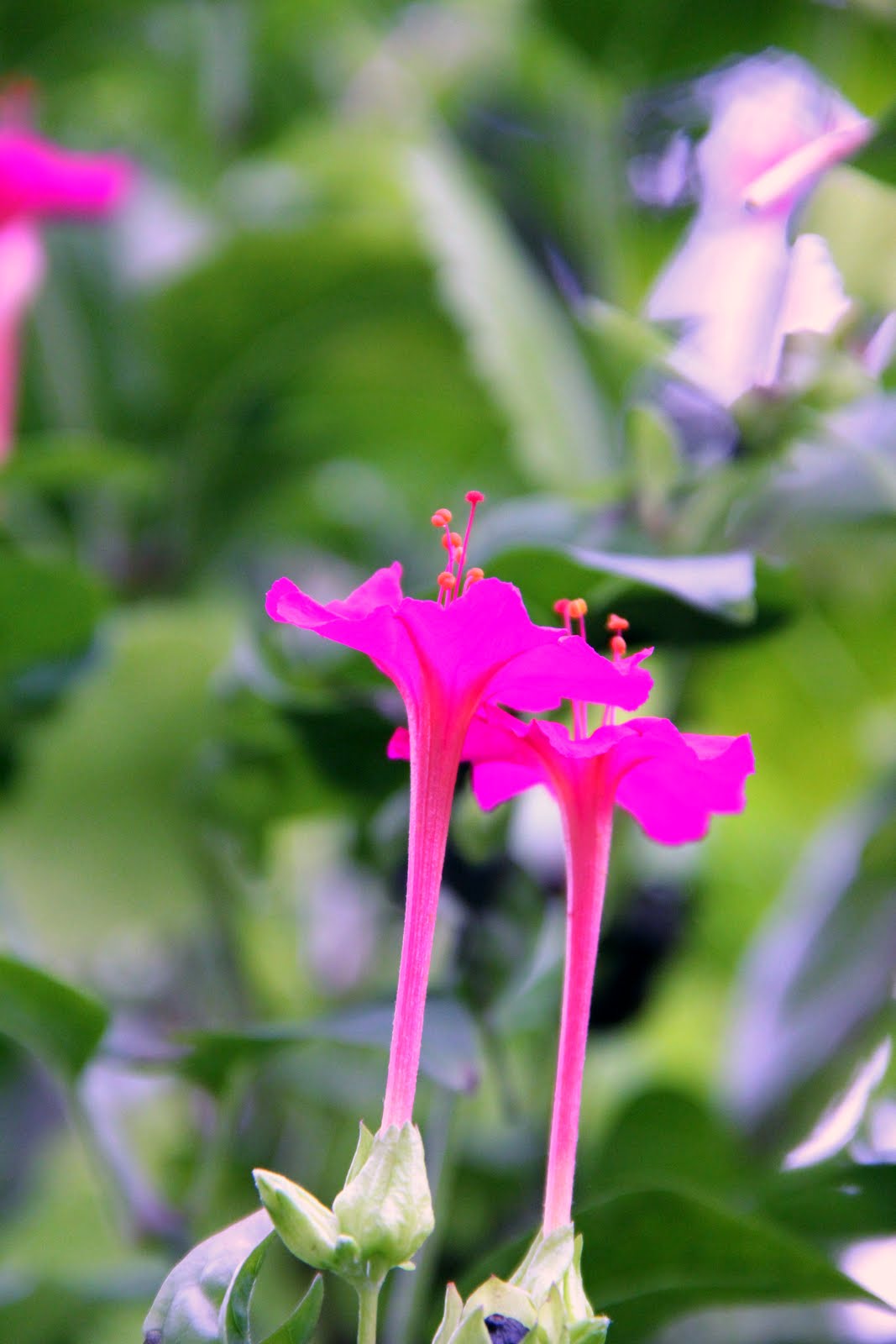
Mirabilis jalapa pink
The botanic name is Mirabilis jalapa . Mirabilis in Latin means wonderful and Jalapa is a town in Mexico. The flowers are available in many colors, a curious aspect of this plant is that flowers of different colors can be found simultaneously on the same plant. Different color variation can be found in the same flower.
Wednesday, October 26, 2011
Little whiite flowers in bonsai
Friday, August 26, 2011
Wednesday, January 19, 2011
Sunday, December 19, 2010
Today's flowers: torenia
Saturday, December 11, 2010
Tuesday, November 30, 2010
Globe amaranth
I love this plant! It is carefree, easy to grow drought tolerant, and the beautiful, button like purple flowers will brighten any shady site. For places that get about two three hours of of sun a day, Globe Amaranth is a great choice.
I am linking this post to Beth at You Capture, theme topic: kindred.
Wednesday, November 17, 2010
ABC Wednesday-R For Roses
White rose plant grow beside a pink rose plant, do you notice the little pink on the white petal?
Sunday, November 14, 2010
Monday, October 18, 2010
Sunday, September 19, 2010
Tuesday, September 14, 2010
Grow Episcia
My share on Ruby Tuesday today is this lovely plant with tiny red flowers.
You can find them easily in Singapore. You may not know the name, and think there are one kind of violet. Yes, they belong to the same family as the African violet, their name is Episcia, also known as “flame violets”. Episcias are tropical plants that require warmth, and prefer humidity, so it grows well in our climate.
You don’t need green finger to grow Episcia. For most species, they grow incredulously fast, covering every nook and cranny of a garden, they are good as a carpet plant. Episcias freely produce solons, which bear small plantlets at their tips, propagation is extremely easy, just stick the stolons into the soil. They will just root and grow into a new plant. As such you can keep it as houseplant, a potted episcia plant will make a perfectly beautiful hanging basket for a semi-sunny window.
…many stolons grow out from mother plant
While they are growing, it’s better to remove the small, developing stolons, to allow the main plant quickly mature. Once the main stem gets thicker and stronger, it will bloom. When they have many flowers, you can pot it into a larger pot or basket, and allow the stolons to grow. They will eventually produce blooms and stolons. Remove unwanted stolons and old leaves, otherwise, the plant will look “weedy”. This plant don’t have any flowering season here, they bloom whole year round, their nice foliage are more appreciated even when they are not in bloom.
…I like their huge variation in leaf pattern and texture
One funny thing is this plant have chameleon-like behavior, the beautiful, variable colorful foliage grown in a different lighting condition, they turned to a different color. A place with good light is just perfect for them to grow the lovely colors of the leaves. But If the light is too bright, however, leaf color might be a bit dull…
We are all too familiar with the green-leafed Episcia, actually there are many other cultivars and hybrids of Episcia with with dazzling leaf colors and patterns. Most of them have the bright red colour of flowers, but I have seen the yellow flowers too, the another type with red edge on the leaves. However some are not as easy to grow as the common green one – even the dark red leaves type like the last picture, it grows slower than the green type.
They are just lovely, right? Grow one of your own.