I remember that my grandma used the young pods Petai jawa to cook Asam soup when I was a kid, I missed the taste so much now. The pods are thin, flat, green and nearly transparent when young, ripening to brown, rattling with many small, flat seeds.
I found a lot of these large bush growing in our parks, on our sea shore... I am not sure if they are the one can be eaten as a vegetable.
Puff-ball shaped flowers made up of pale green petals and lots of creamy white stamens, it looks like a giant mimosa.
Tuesday, December 20, 2011
Sunday, December 18, 2011
Sea Hibiscus
Its botanical name is "Hibiscus tiliaceus", a species of flowering tree in the mallow family, Malvaceae, that is native to the Old World tropics. It is a common coastal plant in Eastern and Northern Australia, Oceania and Southeast Asia. The common names include Sea Hibiscus, Beach Hibiscus, Coastal Hibiscus etc.
This is a very common tree, often seen on many of our wild shores or planted in our seaside parks in Singapore. The tree can grow up to 15m height, the big leaves is about 10-15cm in heart-shaped, dark green and shiny above, white and finely furry beneath. The leaves have tiny slits on the main veins on the underside of the leaf. Secretions from these slits often attracts ants. I believe it attracts many other insects too, often seen the leaves are 'broken heart".
The flower is just like common hibiscus flower, yellow with maroon eye fading to dull pink after falling. It looms in the morning after the sunrise and close in the afternoon. The petals usually fall off the same evening or the next morning. Usually, every flower sets fruit. Fruit ripens to a tiny dry capsules (2-3cm) surrounded by the calyx. It splits open to reveal the seeds which float and can withstand extended periods of immersion in sea water.
This is a very common tree, often seen on many of our wild shores or planted in our seaside parks in Singapore. The tree can grow up to 15m height, the big leaves is about 10-15cm in heart-shaped, dark green and shiny above, white and finely furry beneath. The leaves have tiny slits on the main veins on the underside of the leaf. Secretions from these slits often attracts ants. I believe it attracts many other insects too, often seen the leaves are 'broken heart".
Saturday, December 17, 2011
Lantana flowers
"Lantana is a genus of about 150 species of perennial flowering plants in the verbena family, Verbenaceae. They are native to tropical regions of the Americas and Africa but exist as an introduced species in numerous areas, especially in the Australian-Pacific region. The genus includes both herbaceous plants and shrubs growing to 0.5–2 m (1.6–6.6 ft) tall. Their common names are shrub verbenas or lantanas. The generic name originated in Late Latin, where it refers to the unrelated Viburnum lantana."
There are many colors of Lantana you can find in the nursery, such as white, yellow, purple, pink and orange and even red. Some varieties are spreading such as the yellow and some are small bushes like the purple and white and then some are very large like the orange and pink can grow up to 6’ high.
Lantana loves full sun and bloom whole year round, is seldom bothered by pests or disease, likes most soil types and is happy in humid or dry heat. It require less water and fertilizer compare to other flowering palnts. For those of you looking for a flowering plant that easy to take care, this Lantana plant is a best choice. Especially for those who have a garden, this cheerful flowering plants will be covered all day long with butterflies, bees, and even hummingbirds.
Hope you like my post and picture, sharing with Pink Saturday.
Wednesday, December 14, 2011
Tuesday, December 13, 2011
Saturday, December 3, 2011
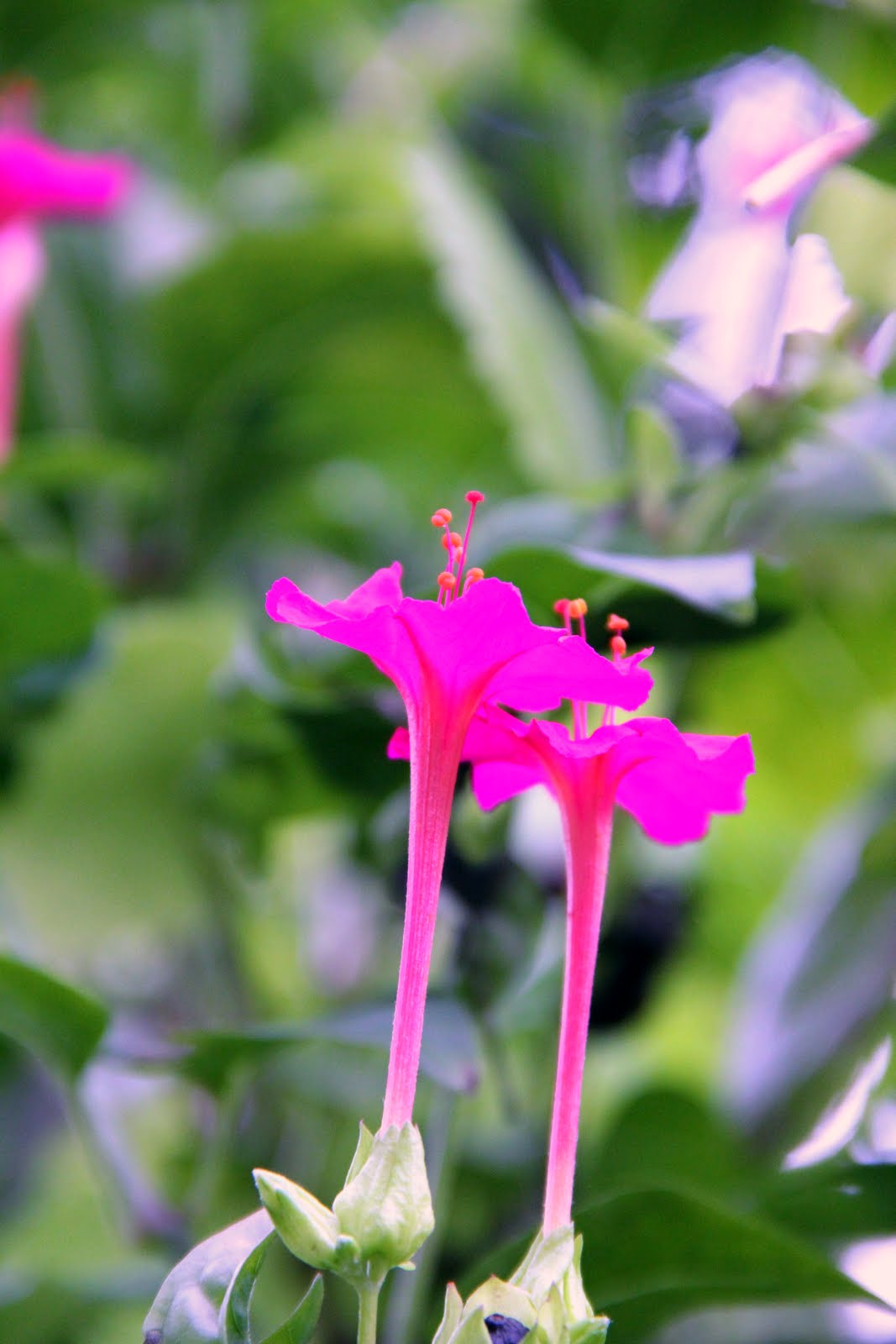
Mirabilis jalapa pink
I called this morning glory like flowers "The four o'clock flower" when I was young, because it usually bloom around afternoon 4 o'clock with a strong, sweet-smelling fragrance, the flowers last only 1-2 days, The single-seeded fruits are spherical, wrinkled and black upon maturity which children like to play with them.
The botanic name is Mirabilis jalapa . Mirabilis in Latin means wonderful and Jalapa is a town in Mexico. The flowers are available in many colors, a curious aspect of this plant is that flowers of different colors can be found simultaneously on the same plant. Different color variation can be found in the same flower.
Thursday, December 1, 2011
Abroma augusta
Botanical Name : Abroma augusta
English Name : Devill's cotton, Indian hemp
I found this tree in Singapore Botanical Garden, I have not seen it in other places. The tree is about 2 meters height. The leaves are repand, narrow and entire, have an oblong shap. Both leaves and stems are covered with soft, bristly hairs that are extremely irritating to the touch. The flowers are about 5 cm in diameter in dark maroon color, the flowers have 5 petals, are formed in terminal panicles. The seeds are contained in a cotton-like envelope.
According the given information, this unusual plant is one kind of herbal plant. In Ayurveda the juice of fresh leaves is very useful in female diseases of uterus and menstruation. It regulates the menstrual flow and acts as an uterine tonic.
English Name : Devill's cotton, Indian hemp
I found this tree in Singapore Botanical Garden, I have not seen it in other places. The tree is about 2 meters height. The leaves are repand, narrow and entire, have an oblong shap. Both leaves and stems are covered with soft, bristly hairs that are extremely irritating to the touch. The flowers are about 5 cm in diameter in dark maroon color, the flowers have 5 petals, are formed in terminal panicles. The seeds are contained in a cotton-like envelope.
According the given information, this unusual plant is one kind of herbal plant. In Ayurveda the juice of fresh leaves is very useful in female diseases of uterus and menstruation. It regulates the menstrual flow and acts as an uterine tonic.
Subscribe to:
Posts (Atom)